EVERNOW
Menopause care is within reach
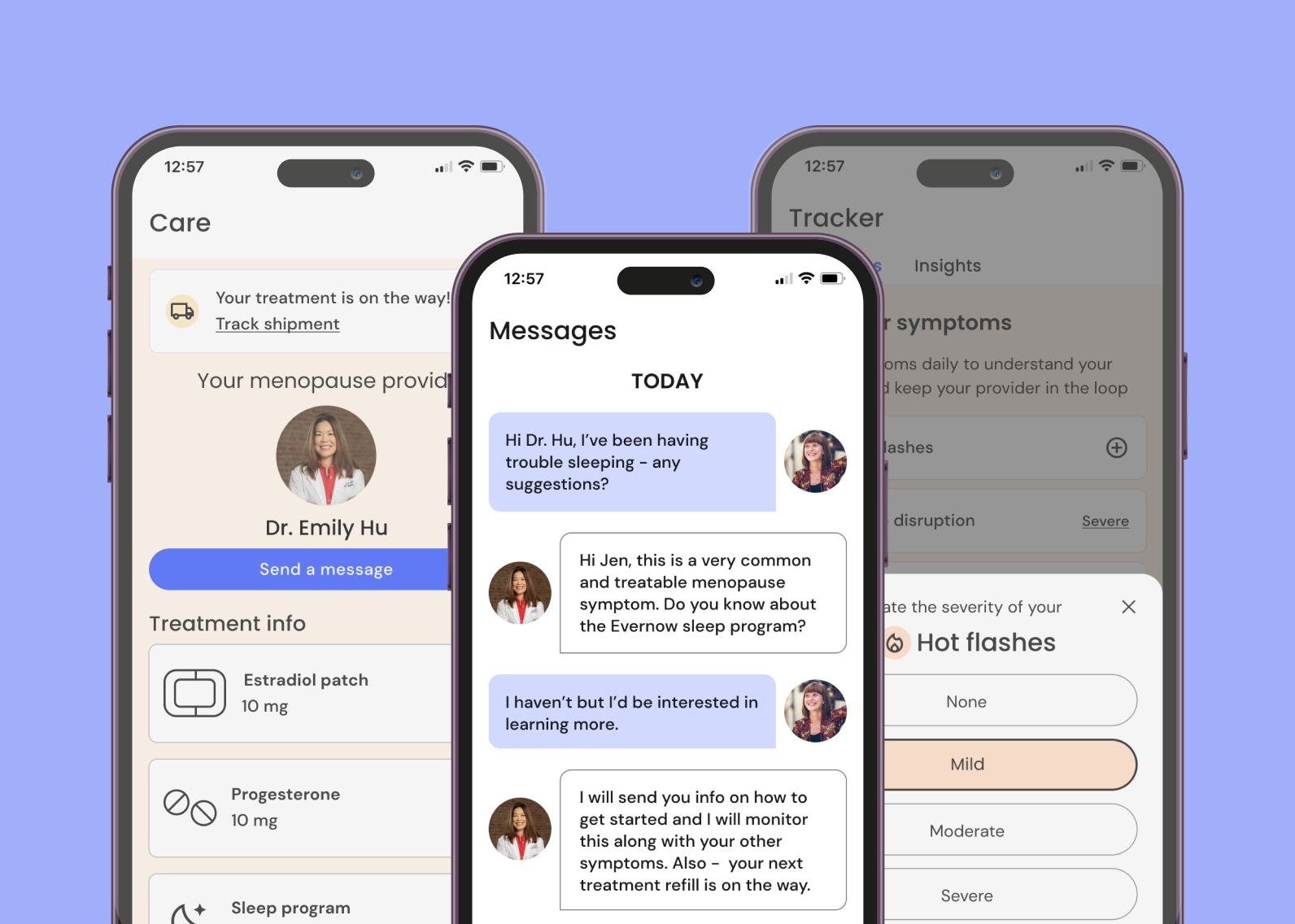
An iOS app, available in the App Store, connecting women to personalized menopause care and support through telemedicine, medication, and expert resources and programs.

INTRODUCTION
Expertise: UX, UI, Testing + Market Research
Team: 1 UX Designer, 6 engineers, 1 product manager
Tools: Figma, user interviews
Deliverables: Beta version (within 4 months), iOS 1.0 launched in the Apple Store (within 7 months)
Context
The menopause transition, which usually lasts for about 7 years, has historically been a taboo and misunderstood phase of life due to lack of information, dialogue, and support. Women often struggle to understand what’s happening to their bodies and how to address these issues, and there are few places they can turn to for reliable information or effective treatment they can trust.
Problem
Evernow is a startup focused on helping women experiencing menopause live longer, healthier lives through telehealth services with menopause specialists, individualized treatment plans, and other resources. Previously, Evernow’s members had to rely on an inconvenient and neglected webpage to send messages with their providers, reference treatment information, and explore content, requiring logging in. By developing a mobile app, we believed could more effectively meet the needs of our members.
“You’re going “What is going on? What is going to happen next? When am I going to end it? When is this going to stop?”
Challenge
Our primary objective was to create an iOS mobile app, shipped within 6 months, that would provide an engaging, accessible, and convenient experience for Evernow's members while they're on the go. This new app would enhance the existing offerings and introduce additional features to better support, empower, and educate members throughout their menopause journey. Additionally, we identified the potential of a future freemium version of the app as a means to attract new members and drive acquisition, which would in turn differentiate and strengthen Evernow’s position in the market.
My Role
As the first Senior Product Designer on the cross-functional agile Customer Journey Squad, I collaborated and led the end-to-end UX design process of the company’s mobile app from the initial concept stage to iterative sprints and refinements, culminating in its successful launch on the Apple Store in November 2022. In addition to this project, I simultaneously undertook various other initiatives focused on enhancing the user experience, including the new web-based patient portal.
THE PROCESS
Phase 1: Concept + Discovery
To meet our startup timeline and deliver an app to our members, we prioritized efficiency and diligence in the design and development stages. Through stakeholder interviews, expert input, and user journey mapping, I gained valuable insights that guided my early designs. Concept testing provided concrete feedback, ensuring we were on the right track to meet our target audience's needs.
Phase 2: Beta Version
Our main goal was to create a beta app version for gathering member feedback on design. This input helped us define and prioritize features for a minimal viable product (MVP) that addressed their crucial needs and guided us in refining the user experience to resonate with our target audience.
Phase 3: Launch + Beyond!
By incorporating valuable lessons from our beta testing phase, we identified key areas for improvement and focused on achieving a polished and complete UI design. In November 2022, we proudly launched our app on the Apple Store, which involved refining the symptom tracker, homepage, and adding account and care plan pages. The results were remarkable, surpassing our expectations with high adoption rates, receiving extremely positive feedback from user interviews, and inspiring us to continue designing new features and functionalities.
Phase 1: Concept + Discovery
Phase 2: Beta Phase
Phase 3: Launch + Beyond
Concept + Discovery
Internal Audit
To begin the discovery phase, we utilized available resources to understand the business, clinical, and user perspectives. One of the first things I did when I joined Evernow was to conduct stakeholder interviews with product owners, managers, and subject matter experts. Their knowledge, along with insights from healthcare providers, accelerated our understanding of the company and key issues surrounding menopause. This process clarified core business goals, project requirements, constraints, and expectations, which along with the key insights gleaned from user research, guided the ideation stage.
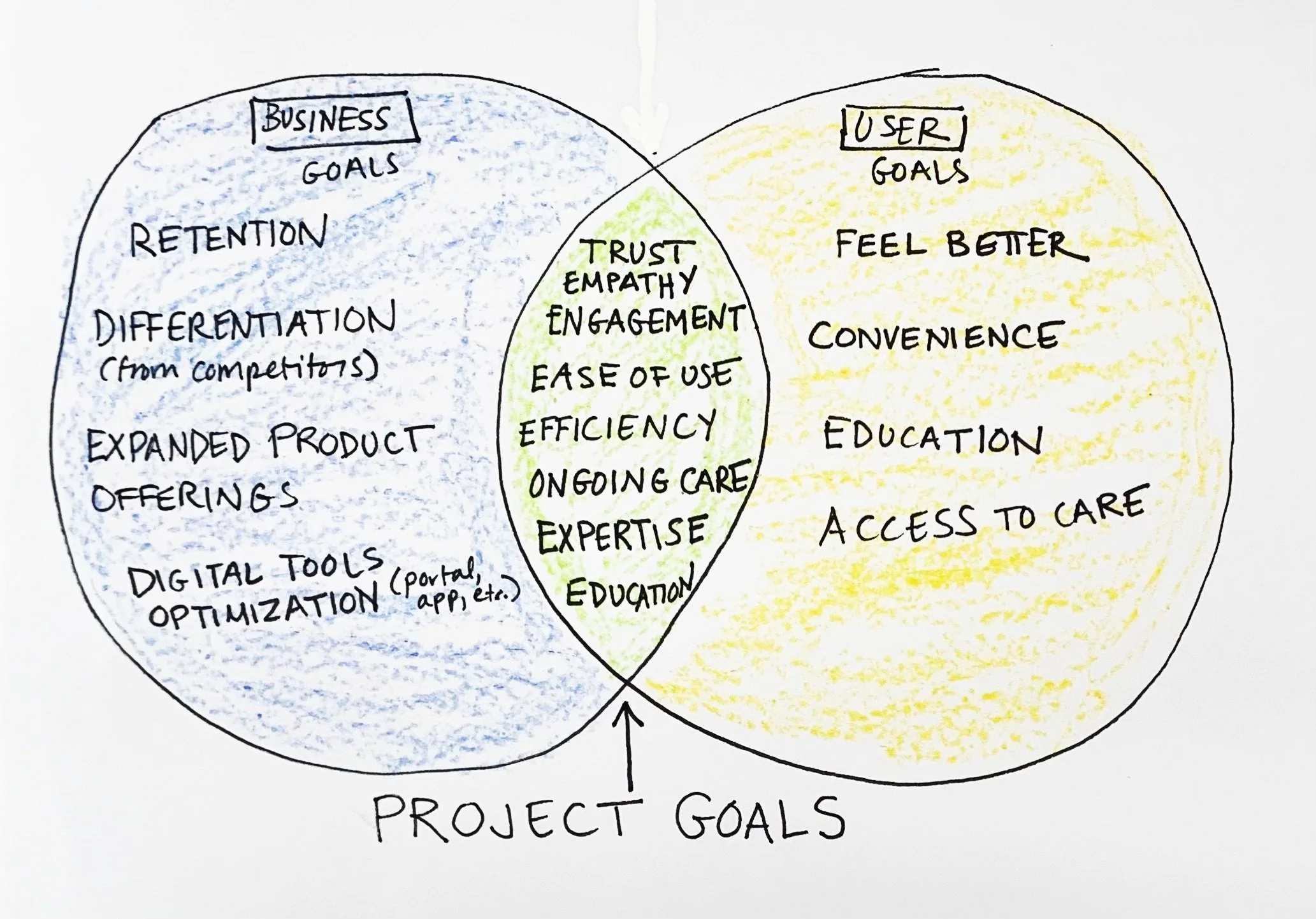
This Venn diagram illustrates overlapping business and user goals elucidated by early research with internal sources and users.
User Journeys
We partnered with external consultancies to gather qualitative and quantitative data, integrating it into comprehensive journey and and empathy maps (see sample below). Our aim was to understand the needs and challenges of women in perimenopause and menopause. We synthesized data from women in our target demographic, including 2,000+ online survey respondents aged 40-60, as well as 22 women aged 40-55 through focus group discussions and 1-on-1 interviews. This collaboration provided valuable insights to validate and inform my design decisions.
Key User Insights
● I feel alone
● What’s happening to my body?
● Are my symptoms normal?
● I don’t know what to expect
● I can’t find info I can trust
From Synthesis to Solution (ideas)
This qualitative and quantitative research deepened our understanding of user perspectives during product planning - helping us identify pain points, critical touch points, and valuable opportunities to enhance the overall user experience. With the insights in mind, we conducted a cross-functional brainstorming session virtually via FigJam with the Marketing, Medical, and Product Teams, using “How Might We” questions as prompts for generating potential solutions to our users’ most pressing needs. The results of this process helped clarify and validate our focus areas and prioritize future efforts.
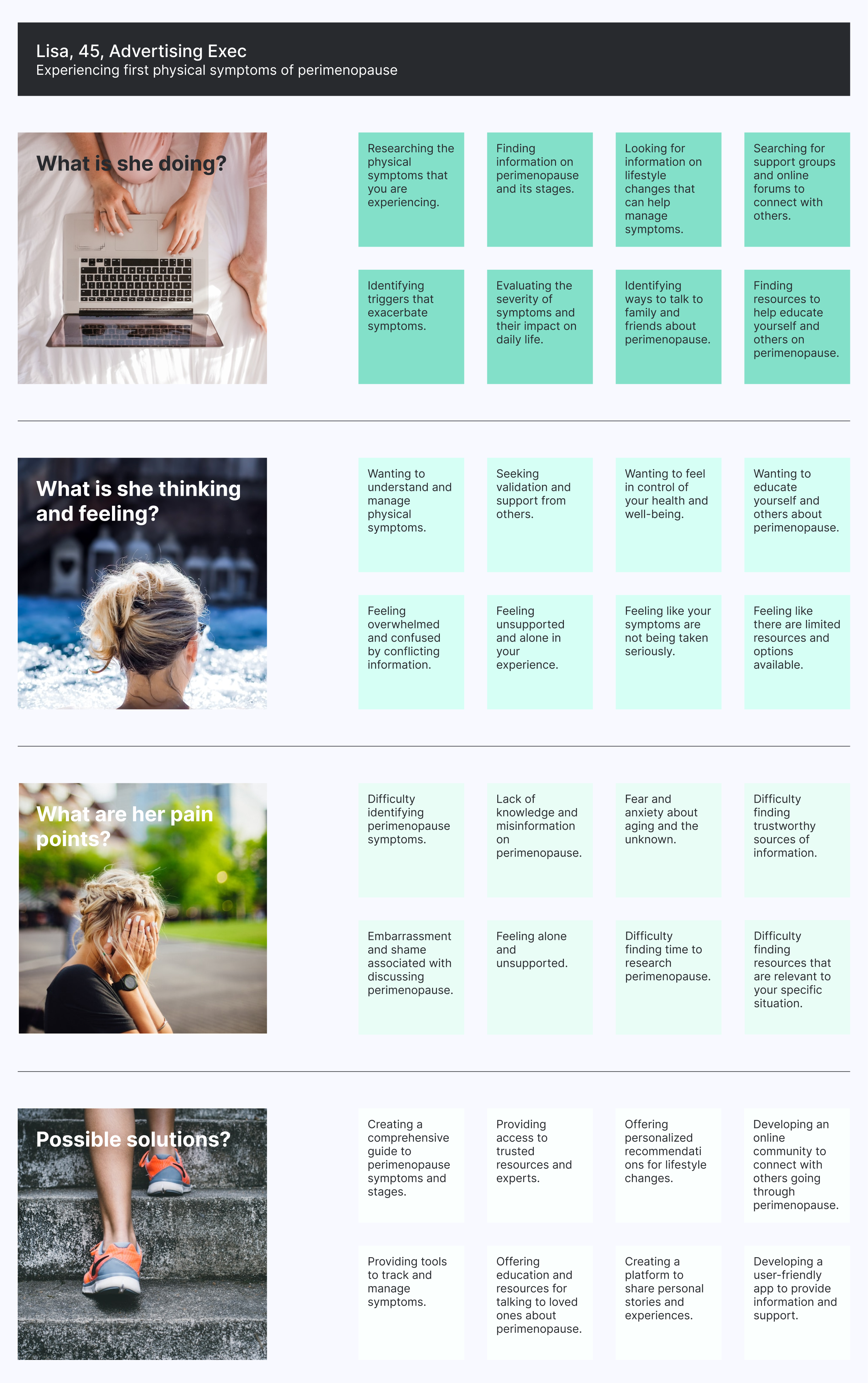
This map combines key findings from user research and incorporates potential solutions generated from our ideation sessions with stakeholders.
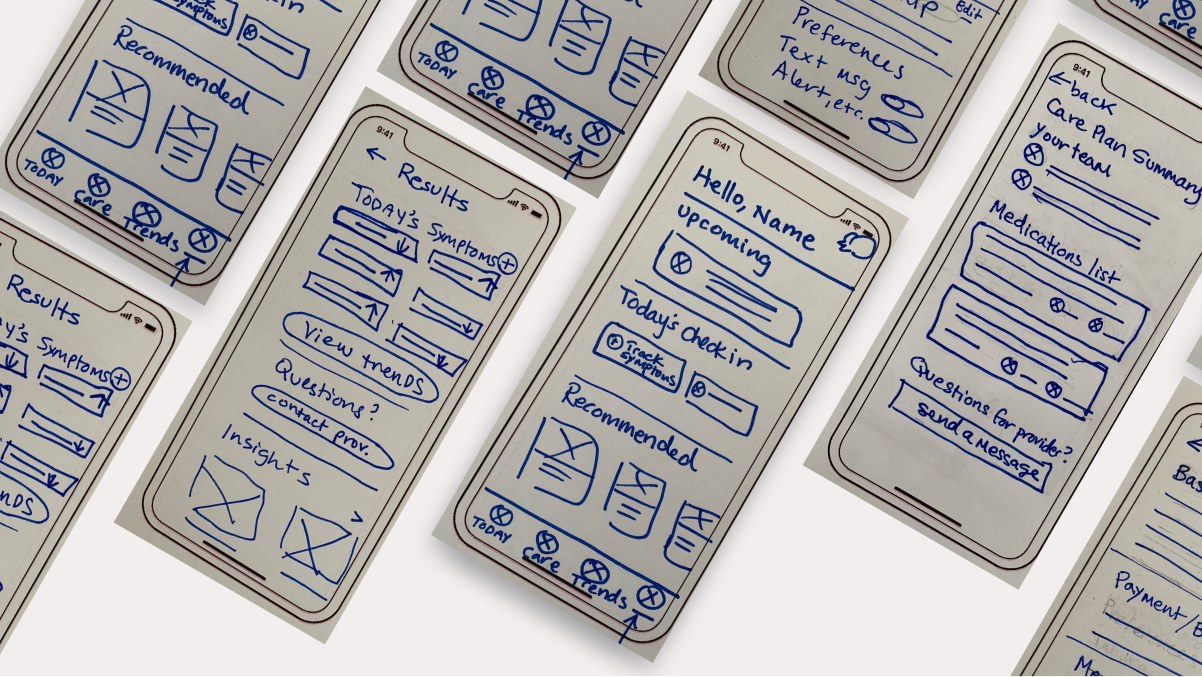
Early sketches incorporated features such as a symptom tracker, personalized insights, and recommended content by experts, that would address uncertainty about symptoms and desire for trustworthy information.
Concept Testing
To ensure the success of our early prototypes, we engaged in concept validation with 10 users from our target audience through Usertesting.com. This iterative process enabled us to swiftly validate our assumptions and implement essential refinements before delving into intricate design aspects. Beyond validating features and functions, this early testing phase also enabled us to confirm that user flows were intuitive and provided a frictionless experience while navigating the site.
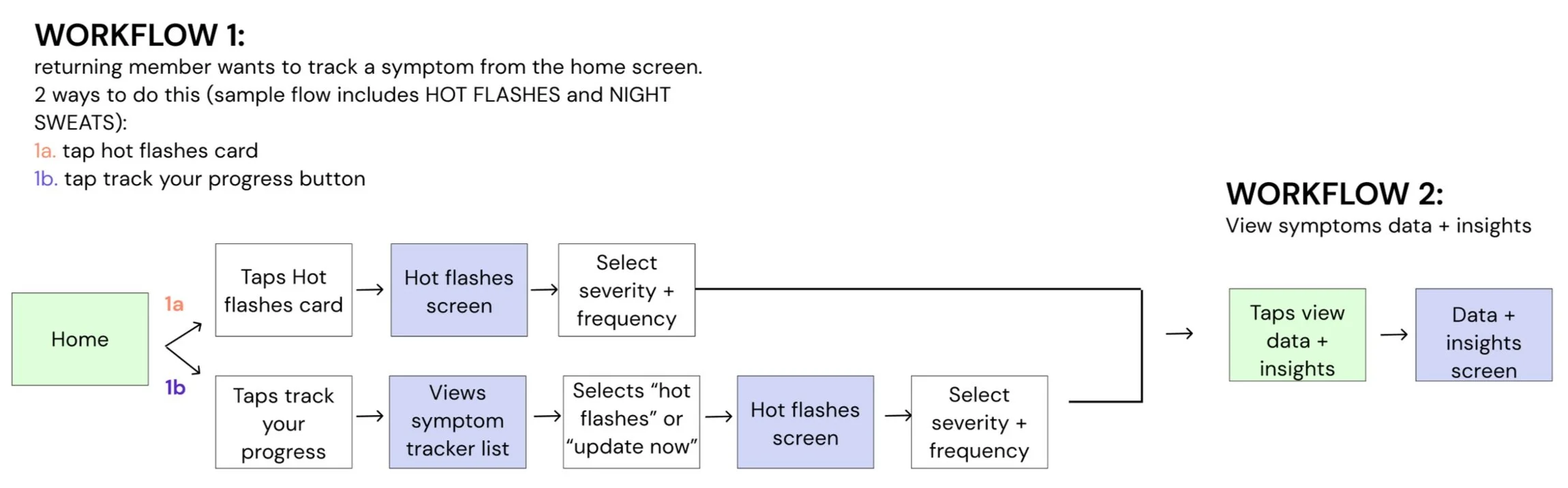
At this stage we were ready to create product requirements and user stories and bring engineers into the conversation as we forged ahead with designing a beta version of the app. This collaborative approach enabled us to lay a strong foundation for the beta version of the app, combining the creative vision with technical feasibility. By bridging the gap between design and engineering, we ensured a comprehensive and well-rounded development process that ultimately resulted in a high-quality product.
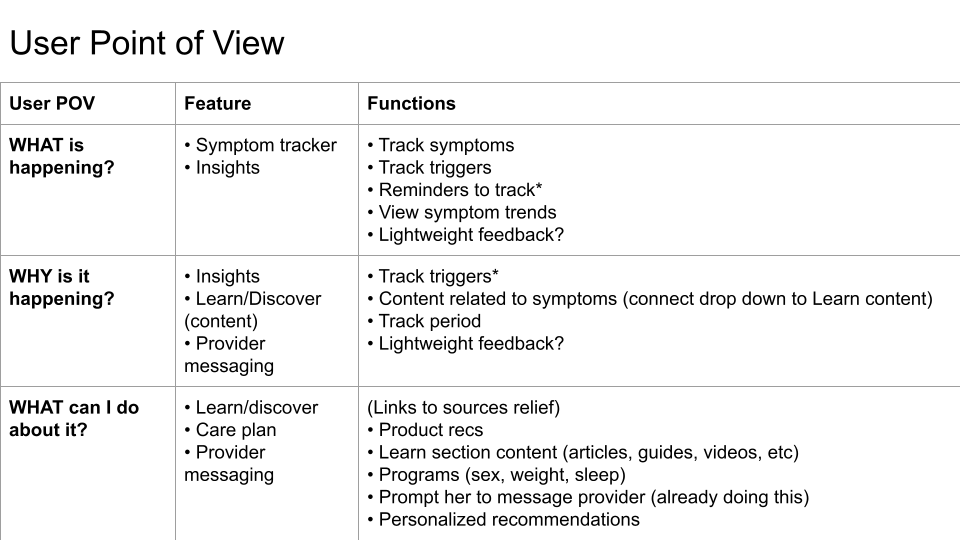
Putting Pen to Paper
Armed with the insights gathered from user journeys, I sketched ideas and laid the foundation for key features and functionality. Early concept testing allowed us to gather crucial user feedback and minimize the risk of developing features that didn't meet user expectations.
I also integrated findings from market research - incorporating common patterns and features inspired by popular health and fitness apps into our initial designs. The market research had the added strategic benefit in helping identify gaps in the market of women's health apps, especially for menopause telehealth companies, which reinforced the untapped opportunity of offering our members a product that would address this specific need.